How to Improve Your ATS Score
To improve your ATS score, match the job description's exact keywords (the literal words, not synonyms), use a clean single-column layout an ATS parser can read, add a dedicated skills section listing those keywords explicitly, quantify your bullet points with concrete numbers, and confirm a high match score before you apply rather than guessing afterward.
Why your resume isn't getting read
You're qualified for the role. You've done similar work. But you're hearing nothing back. The most likely reason isn't your experience. It's that your resume never made it to a human.
Over 98% of large companies use Applicant Tracking Systems to filter applications before a recruiter sees them. ATS software scores your resume against the job description and filters out anything below a threshold. If your score is too low, your application is rejected automatically, regardless of how good you actually are.
What ATS systems look for
ATS systems aren't reading your resume the way a human does. They're scanning for specific signals:
Keyword match. Does your resume contain the skills and technologies listed in the job description? Not synonyms, not implied experience. The actual words.
Job title alignment. Does your most recent title resemble what the role is called? A "Software Engineer" resume applying for a "Full Stack Developer" role may score lower than you'd expect.
Experience structure. Are your roles formatted in a way the parser can read? Unusual layouts, tables, and graphics often confuse ATS parsers and cause your experience to be missed entirely.
Skills section. A dedicated skills section with explicit keywords scores significantly higher than skills buried in bullet points.
The problem with optimizing manually
You could spend an hour on every application. Reading the JD carefully, rewriting your summary, adding keywords, restructuring bullet points. Some people do. Most don't, because it's exhausting at scale.
And even when you do it manually, you have no way to verify it worked. You're guessing whether your changes improved your score.
How JobJam approaches it
Paste the job description into JobJam. It scores your current resume against the role immediately. Not a generic score. You get a breakdown by category: skills matched vs missing, experience alignment, technical fit, soft skills.
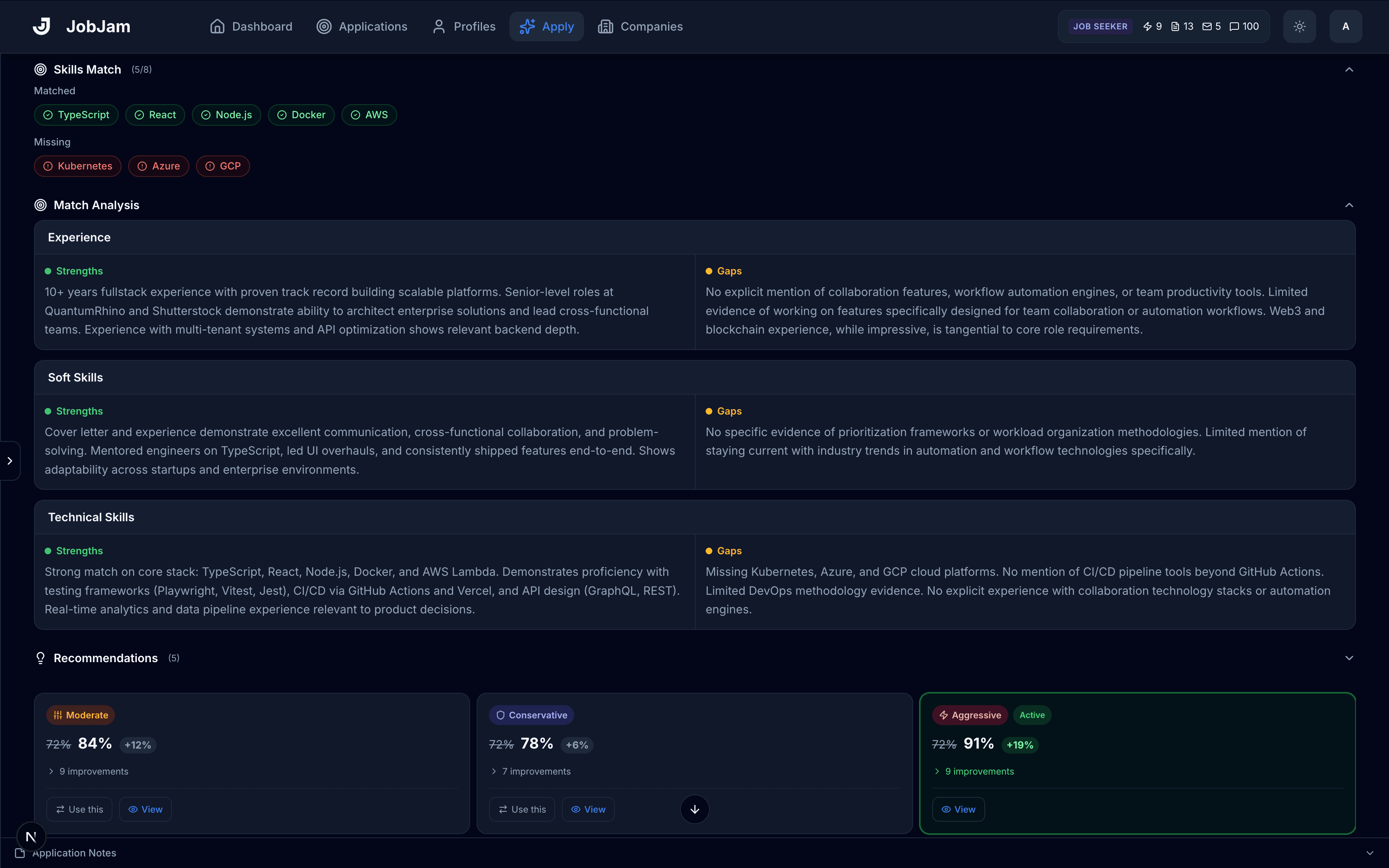 JobJam match analysis showing strengths and gaps across Experience, Soft Skills, and Technical Skills
You see exactly where you're losing points before you apply. The resume optimizer rewrites your resume for the specific role at three levels (Conservative, Moderate, Aggressive) and shows you the new score alongside every change it made.
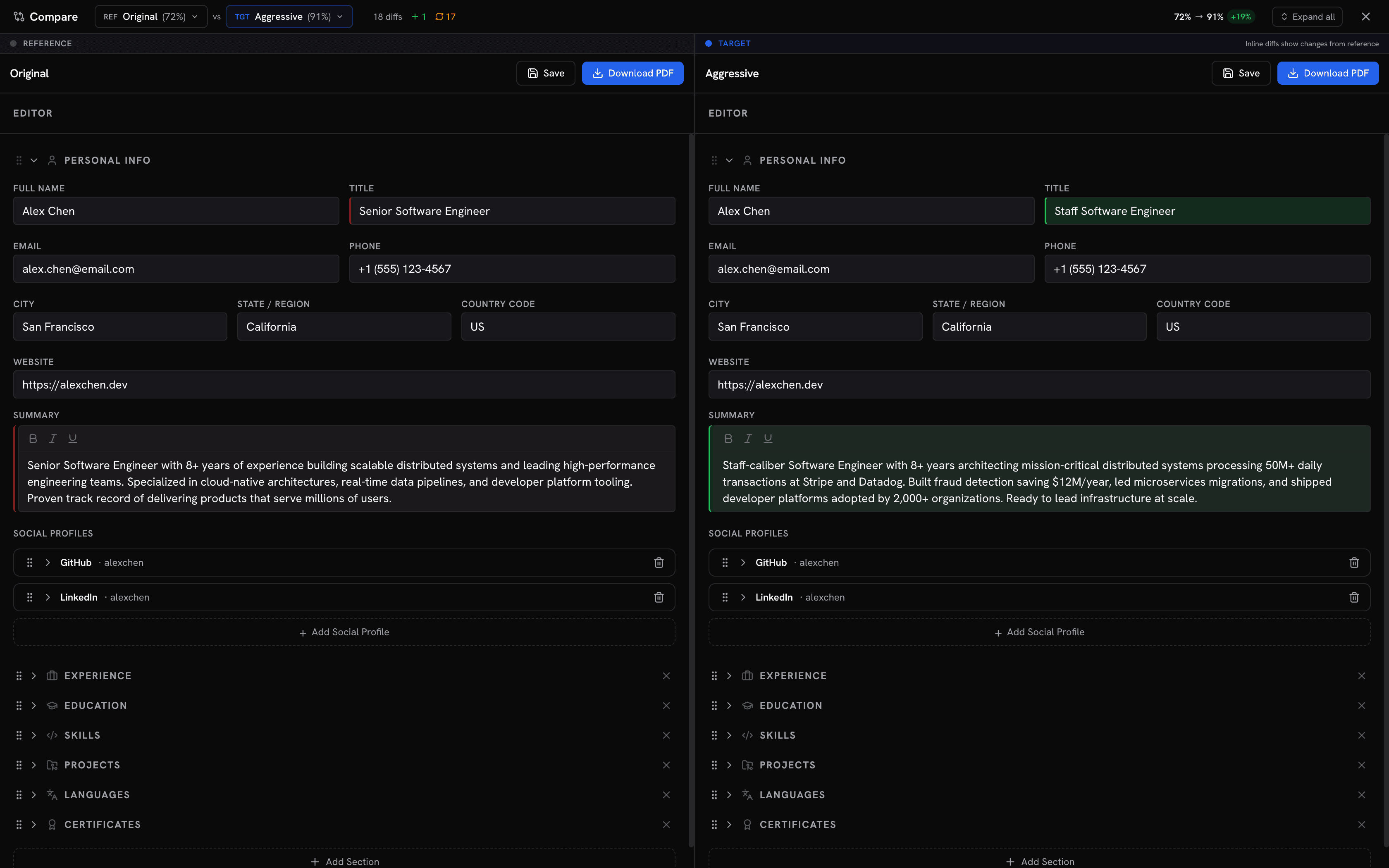 Side-by-side comparison of original vs Aggressive optimized resume in JobJam
You pick the version that gets your score where you want it, export as PDF, and apply. The whole process takes minutes, not an hour.
What score should you aim for
There's no universal threshold. Every company and every ATS configures cutoffs differently. As a general signal: below 70% means you're missing significant requirements and your application is likely to be filtered. 70-85% is competitive. Above 85% means your resume is a strong match and will likely reach a human reviewer.
The goal isn't a perfect score on every application. It's knowing your score before you apply, so you can decide whether to optimize or move on. To see ATS scoring applied to a real posting, read our Kraken Senior Frontend x-ray.
JobJam uses a one-time credit model. No subscription, no auto-renewal. See pricing →